
Blogs.
Blog 5, 02 April 2026 - Melbourne, Australia
A 1600km freight corridor is impressive but the real story is what Inland Rail will unlock next. As bigger supply chains build, and new hubs take shape, an influx of workers will naturally follow the jobs into these growing regions, and every one of them will need a place to live.
Extended STAY Australasia in partnership with Choice Hotels through the MainStay Suites brand is tackling these challenges with purpose-built long-stay accommodation solutions.
With MainStay Suites already established in regional centres including, Mackay, Townsville, Whyalla, and Melbourne suburbs of Abbotsford, Hawthorn, Kew, and Williamstown, we understand why workforce accommodation needs its own blueprint – just as much as the rail line itself.
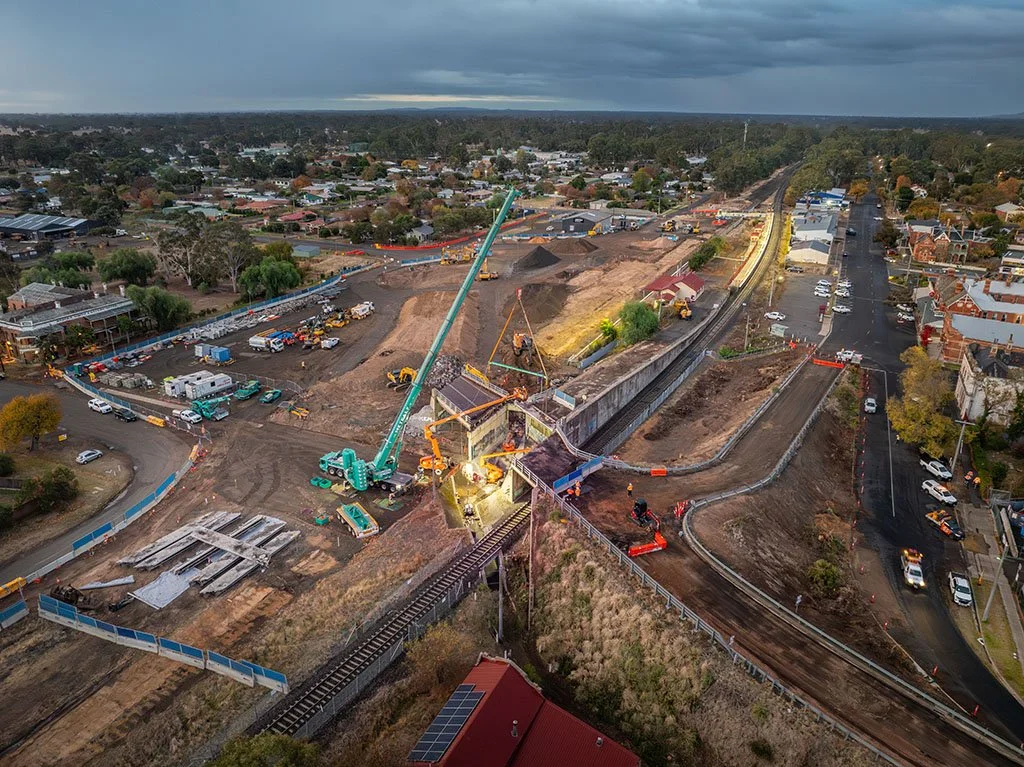
PHOTO CREDITS: © Inland Rail, Euroa
Inland Rail, a 1600-kilometre freight corridor linking Melbourne and Brisbane, is one of Australia’s most significant infrastructure programs, expected to reshape freight inland of the east coast.
But its impact doesn’t stop there.
In Victoria, related projects like Webb Dock and port upgrades are set to amplify container flows through the 2030s, creating a ripple effect across freight corridors and suburban industrial areas. Together, these initiatives represent a decade of intensified logistics activity and specialised workforces, well beyond the initial construction period.
Behind the engineering and freight modelling sits a quieter risk that almost every mega project underestimates.
Accommodation needs at each phase are larger, last longer and are more complex than expected. Construction crews need proximity to site in order to stay productive and safe. Commissioning teams need consistency to move through critical stages without churn. Operations and maintenance staff need stable long-term settings across decades.
Local housing markets aren’t designed to absorb that level of temporary or semi-permanent demand, while short-stay hotels were never built for multi-year workforce cycles. This creates a need for a different type of accommodation solution — one specifically designed for long stay, temporary workers.
When Webb Dock and similar port upgrades are considered alongside Inland Rail’s construction phasing and freight ramp-up, the picture becomes clear. Demand is not a single, steady wave. It is a set of overlapping cycles, moving between locations as work packages begin, peak, hand over and transition into operations.
Sites stay fixed while workforces move.
Accommodation supply stays relatively fixed while demand surges, recedes and surges again.
“Helping regions secure the capacity they need”
Extended STAY Australasia’s planning approach is designed to bring this pattern into focus early, through three strategic lenses:
Mapping actual workforce locations against current and projected accommodation supply — to identify gaps and ensure availability where it's needed most.
Assessing how port, terminal, and corridor upgrades shift work locations and accommodation requirements — enabling proactive relocation of capacity as projects evolve.
Matching the right long-stay accommodation type and duration to each project phase — from peak construction through commissioning to long-term operations, optimising productivity while minimising strain on local markets.
The result is a staged accommodation blueprint that supports delivery, protects local housing markets and gives councils and developers a flexible asset that can move with project cycles.
Inland Rail will evolve over time.
Where freight goes, capability follows. Importantly capability needs somewhere to live that’s close enough to work and integrated into community life.
Extended STAY Australasia, in partnership with Choice Hotels through the MainStay Suites brand, provides a solution to help regions secure the capacity they need. These purpose-built accommodations offer workers a true base – a place where they can feel at home while they work.
MainStay Suites are thoughtfully designed for long-term comfort, featuring fully equipped kitchens, in-room laundry or on-site options, high-speed business-grade Wi-Fi, dedicated workspaces, secure parking, and weekly housekeeping. Backed by Extended STAY Australasia’s commitment to service excellence, these accommodations ensure workers have the safety, security, and stability they need to thrive.
This collective approach ensures nationally significant infrastructure delivers its full economic and social benefit, allowing communities to thrive — without stalling for lack of suitable workforce accommodation.
If you're involved in inland rail, port upgrades, logistics projects, or regional infrastructure delivery, how are you managing workforce accommodation across these overlapping phases? We would love to hear your thoughts or discuss how Extended STAY Australasia could support your needs.
Contact us at: enquiries@extendedstayau.com.au